It comes down to one trade-off: a three-wheel scooter turns more tightly, and a four-wheel scooter feels more stable. Which matters more depends on where you'll use it and how confident you feel.
Side by side
| 3-wheel | 4-wheel | |
|---|---|---|
| Turning in tight spaces | Excellent, turns in a small circle | Wider turning circle |
| Stability | Less stable. Take kerbs and slopes with care | Feels safer and more planted |
| Leg room | More, as there's no front wheel housing between your feet | Less on most models |
| Best for | Shops, narrow aisles, indoors | Pavements, slopes, uneven ground |
Three wheels: nimble but needs care
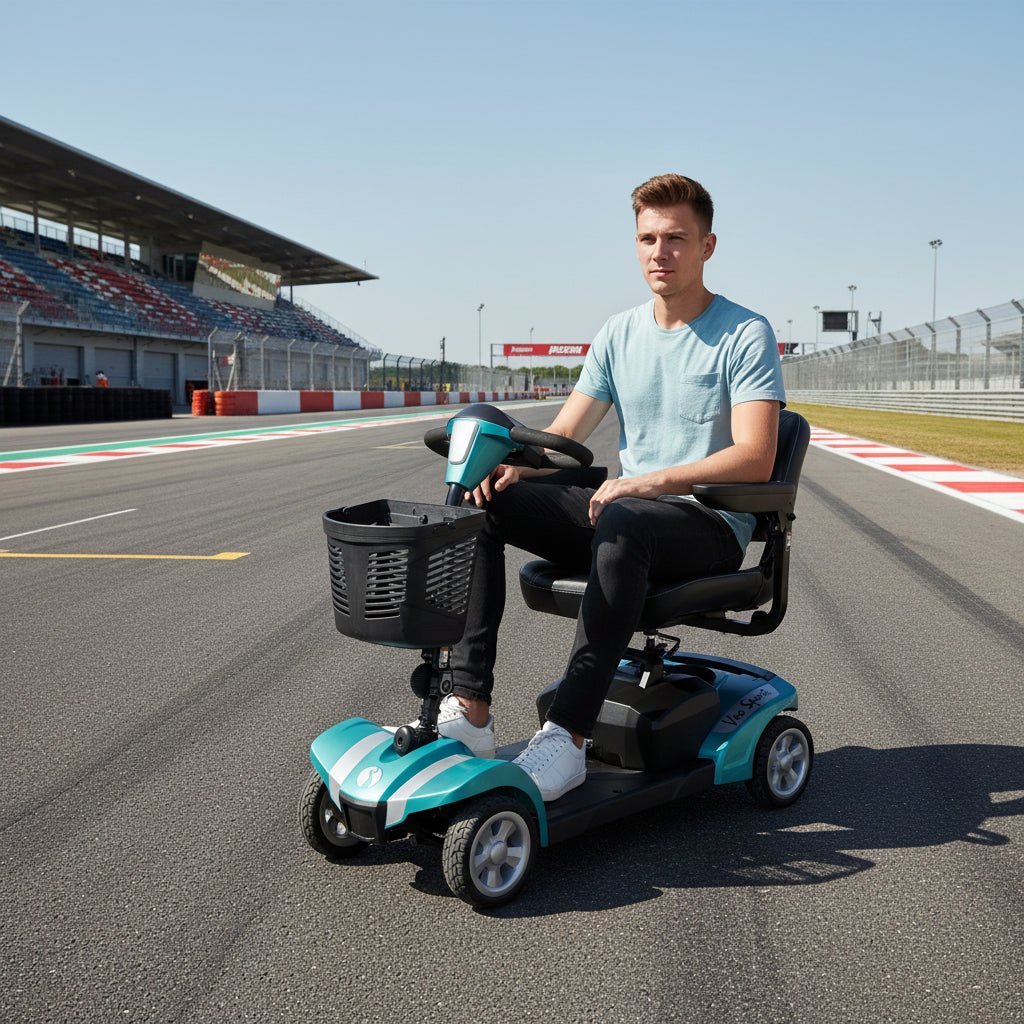
Three-wheelers are great for getting round corners and through tight spaces, like supermarket aisles or narrow hallways. Many people do feel less stable on one, though. You need to think about how you approach kerbs, slopes and cambers, so it doesn't tip.
Four wheels: steadier but wider
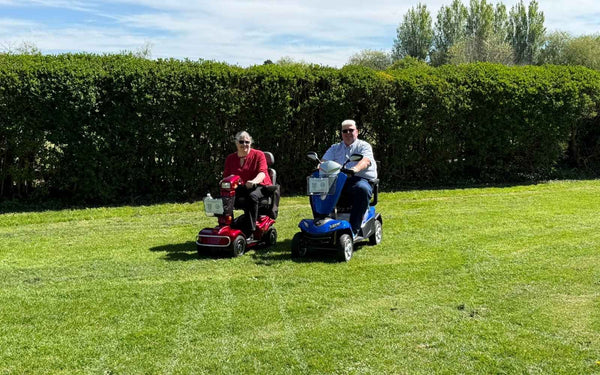
Four wheels feel safer, especially on slopes and uneven pavements. The trade-off is that they don't manoeuvre as easily in tight spots.
The best of both
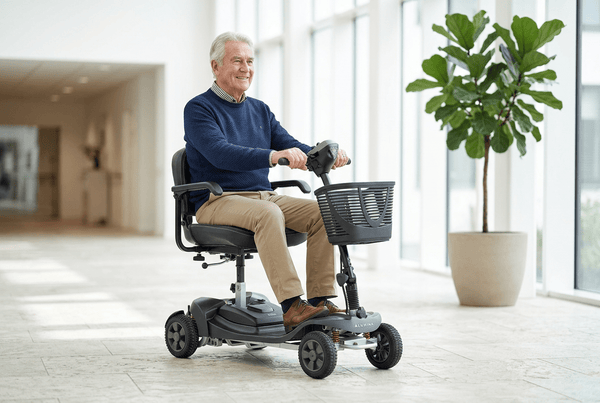
Some scooters bridge the gap. The Motion Healthcare Alumina Pro is a four-wheel portable with the leg room of a three-wheeler. When Tracy's father tried several of our portables, that was the one he chose, for the extra leg room.
Try both
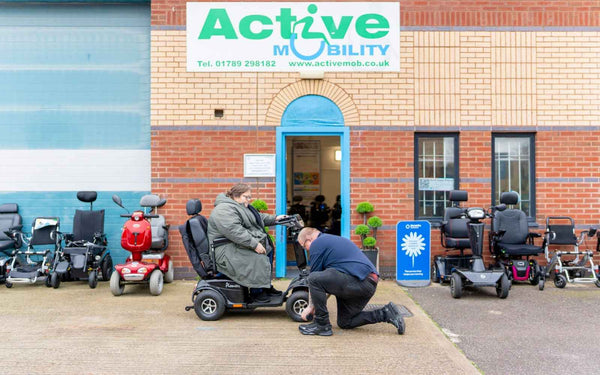
The best way to decide is to drive both where you'll actually use them. Book a free home assessment within 75 miles of Stratford-upon-Avon, or call 01789 339 738 to arrange a test drive at our showroom. See also how do I choose a mobility scooter?
Frequently asked questions
Are three-wheel mobility scooters safe?
Yes, used with care. They're less stable than four-wheelers, so take kerbs and slopes straight on and slowly.
Which has more leg room?
Usually a three-wheeler, though some four-wheel scooters like the Alumina Pro are designed with extra leg room.
Which is better indoors?
A three-wheeler, as it turns more tightly in small spaces.