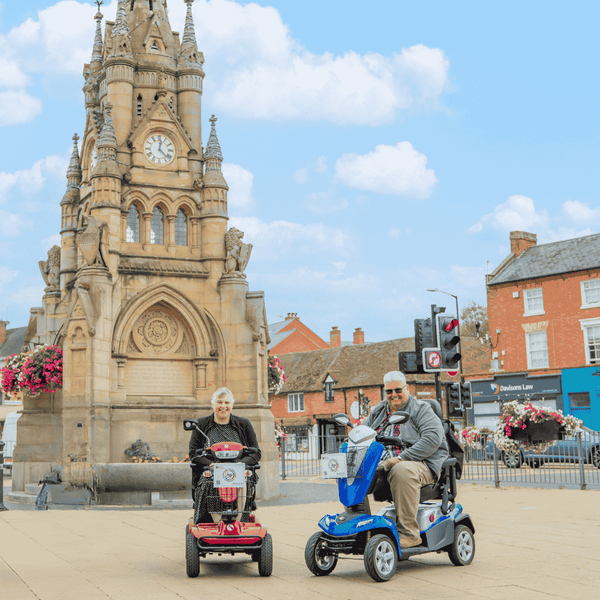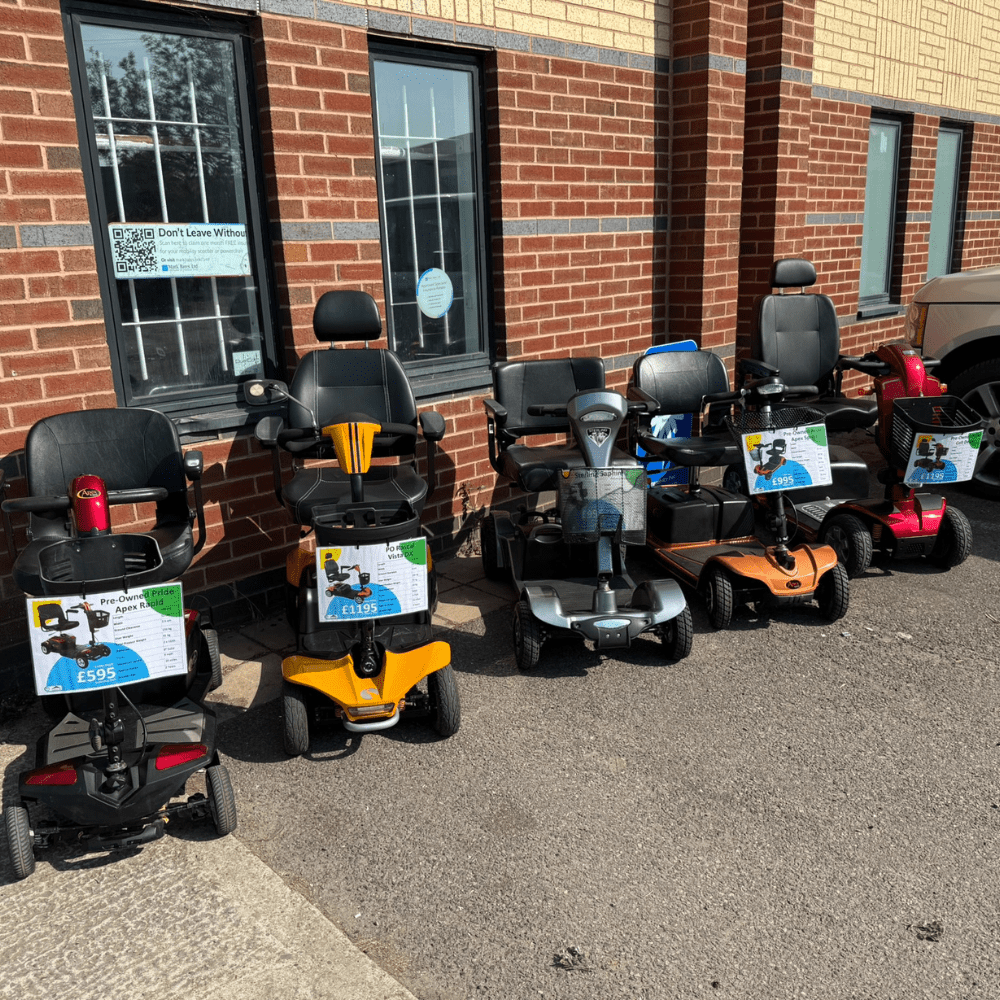
There are five main types of mobility scooter: portable, folding, mid-size, road (Class 3) and heavy-duty. The right one depends less on the scooter and more on you: where you'll go, where you'll keep it, whether it goes in a car, and who will lift it. Here's how each type works, with the models our customers choose most.
The types at a glance
| Type | Top speed | Goes in a car? | Best for |
|---|---|---|---|
| Portable (boot) | 4 mph | Yes, comes apart | Trips out by car, holidays |
| Folding | 4 mph | Yes, folds in one piece | Short trips, if someone can lift it |
| Mid-size | 4 to 6 mph | Usually not | Everyday local use, smaller storage |
| Road (Class 3) | 8 mph | Rarely | Longer distances, roads and pavements |
| Heavy-duty | 8 mph | No | Larger riders, rough ground |
Portable (boot) scooters
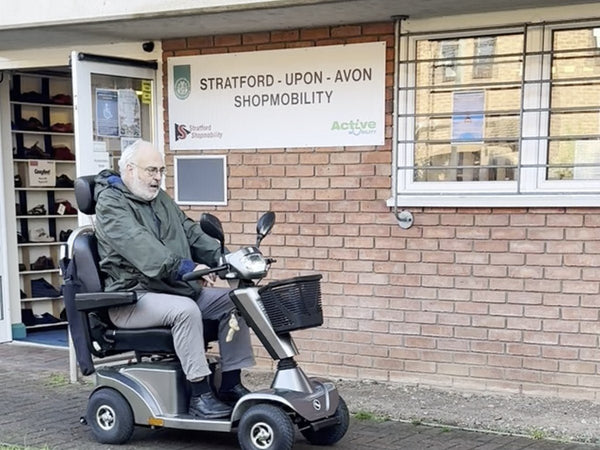
A portable scooter comes apart into four or five pieces, so no single piece is too heavy to lift into the boot. They're Class 2, so they're for pavements, up to 4 mph. Our customers' favourites are the Rascal Vierra, our most popular scooter (you can also hire one from Stratford Shopmobility), and the Motion Healthcare Alumina Pro, which has the leg room of a three-wheeler with the stability of four wheels. See our best portable mobility scooters.
Folding scooters
A folding scooter folds in one piece, which sounds easier. But even the lightest weigh 12 to 17 kg, and you have to lift it all at once. A portable that splits into lighter pieces is often easier. Tracy's honest view: folding scooters are less comfortable and don't feel as safe, so she doesn't tend to recommend them. Read folding vs portable scooters before you choose.
Mid-size scooters
Mid-size scooters are bigger and comfier than a portable but smaller than a road scooter. They fit better in a home or a smaller shed. Some, like the Pride Colt Deluxe, go up to 6 mph. Good choices include the Invacare Leo, the Mayfair and the Rascal Vista. See our best mid-size mobility scooters.
Road scooters (Class 3)
Class 3 scooters go up to 8 mph and are legal on the road, with lights, indicators and mirrors. You still use common sense: avoid busy roads, and drop to 4 mph on pavements. They need a free DVLA registration and a garage or store with a socket. Mike's Choice is the ScooterPac Ignite. The Pride Colt Executive and the Rascal Pioneer are also very popular. If you need 8 mph but must get it in a car, the Pride Baja Bandit is a rare scooter that does both. See Class 2 vs Class 3 and our best Class 3 scooters.
Heavy-duty scooters
Heavy-duty scooters carry larger riders and handle rougher ground, with bigger tyres, stronger motors and full suspension. The Kymco Maxi XLS carries up to 32 stone and suits almost everyone. The Ignite Grande is the big version of the Ignite. Check your doorway and storage first, as these are wide.
Three wheels or four?
Three-wheel scooters turn in tighter spaces and give you more leg room. Many people feel less stable on them, though, and you have to think about how you approach kerbs and slopes. Four wheels feel safer but don't turn as tightly. Read 3-wheel vs 4-wheel scooters.
Five things to check before you choose
- Your weight and height. Every scooter has a user weight limit, and a heavier rider gets less range.
- Where you'll keep it. Measure your doorway, shed or garage, and check there's a socket for charging.
- Whether it goes in a car, and who lifts it. Weigh up the heaviest piece, not the total.
- How far you'll go. Allow for hills, cold weather and the return trip.
- Where you'll ride. Pavements and town suit a Class 2. Roads, fields and longer trips suit a Class 3.
When a scooter isn't the answer
If you struggle to stand up or get on and off a scooter, an electric wheelchair is usually better. If your eyesight is poor, a scooter isn't safe, and a manual wheelchair with someone to push is the right choice.
Talk to us first
We've been helping people choose for 25 years, and we'd rather you buy the right scooter than the wrong one. Call 01789 339 738, call first if you'd like to visit our Stratford-upon-Avon showroom, or book a free home assessment if you're within 75 miles.
Frequently asked questions
What is the most popular type of mobility scooter?
With our customers, portable boot scooters, and the Rascal Vierra in particular.
What's the difference between Class 2 and Class 3?
Class 2 scooters go up to 4 mph and are for pavements. Class 3 go up to 8 mph, can be used on the road and need a free DVLA registration.
Which mobility scooter fits in a car boot?
Portable scooters, which come apart, and folding scooters. The Pride Baja Bandit is one of the few 8 mph scooters that comes apart for a car.
Which scooter is best for a heavier person?
A heavy-duty scooter such as the Kymco Maxi XLS, which carries up to 32 stone.